Nonparticipant Observation: Non Participant Observation
Di: Everly
Different Types of Observation
非参加観察法 (non-participant observation) 観察法 (observation) 対象となる人や行動を、自然な状況や統制された状況のもとで観察する方法です。 分類方法 観察法の分類は、観察場面
Observation-based research that is conducted with-out subjects‘ awareness of being studied is often known as nonparticipant, unobtrusive, or nonreactive research.
Data triangulation from nonparticipant observations, interviews and survey data (Creswell & Plano Clark, 2018) were collected in a large international implementation cluster
Participant or Non-Participant? There are two basic methods of observation open to the researcher: participant and non-participant. The participant observer will take part in the
Nonparticipation observation is a relatively unobtrusive qualitative research strategy for gathering primary data about some aspect of the social world without interacting directly with its
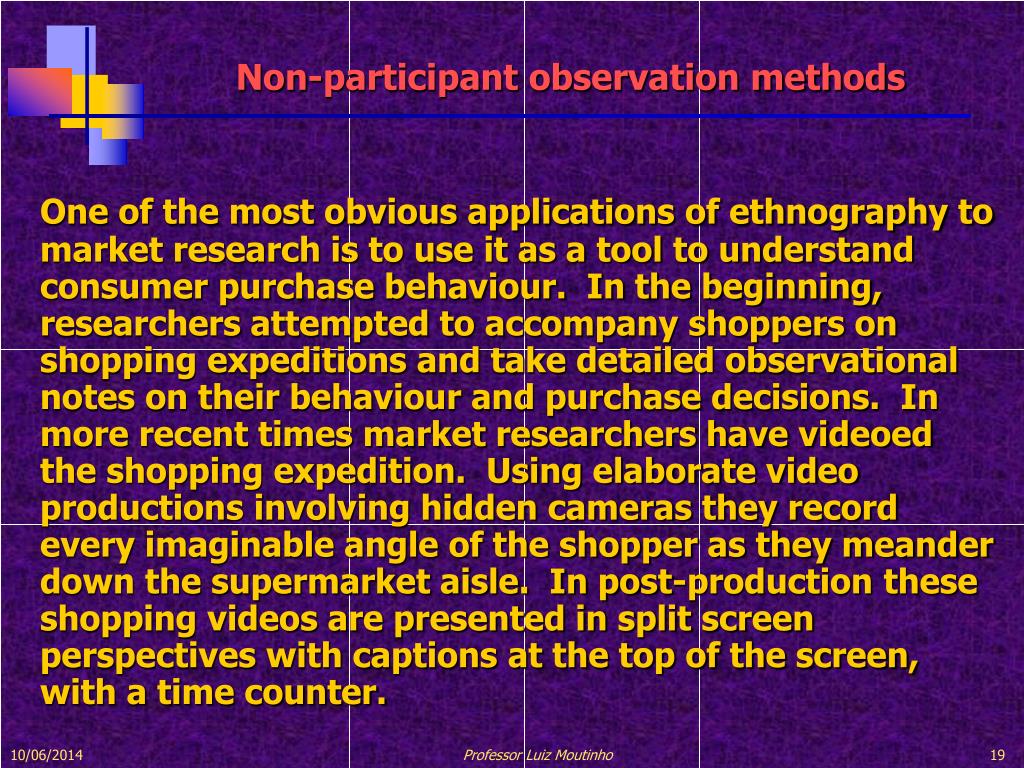
non-participant observation refers to observing research subjects without them knowing that they are being observed at all. Sometimes researchers pretend to be customers or passers-by, or
Non-participant Observation
- Participant & Non Participant Observation
- Non-participant observation
- Participant and Non-participant
Observations are suggested as a valuable but under-used approach in implementation research for gaining a holistic understanding of contexts. The aim of this paper
Some sociologists conduct observational research without participating in the activity being studied in order to reduce the risk of those being observed will be affected by the
non-participant observation in an ethnographic approach to examining the role of community health nurses as ‘agents of information’. Observations of nurses at work with senior citizens
The Non-Participant Observer is a research method in which an individual or a group of individuals observe and gather information about a particular event, situation, or phenomenon without actively
pant observation as a technique for the systematic study of human behavior. This article attempts a brief review of the most basic techniques used in nonparticipant observa-tional research.
In non-participant observation, the researcher studies their subjects from the sidelines – they don’t participate or integrate themselves into the lives of the group they are studying. Conducting
Non-participant observation: In non-participant observation, the researcher remains detached from the group and does not take part in its activities. Instead, they observe the
Generally, nonparticipant observation is a technique used for those researchers who want to collect the data without having to interact directly with their participants. (Williams,
In order to achieve the objectives, the technique of non-participant observation will be used, in which the researcher acts impartially and independently of the phenomenon under
- Nonparticipant observation
- RLO: Participant and non-participant observation
- #TiSDD Method: Non-participant observation
- Ähnliche Suchvorgänge für non-participant observation
- What Is Participant Observation?
Observational research methods can be divided into several types based on the level of involvement of the researcher and the structure of the observations. The four main
Participant observation is a research method where the researcher immerses themself in a particular social setting or group, observing the behaviours, interactions, and
Participant observation is a research method where the researcher immerses themself in a particular social setting or group, observing the behaviors, interactions, and
Non-participant observations (NPOs) of the interface of care are an important step in an experience-based codesign (EBCD) approach to health system improvement (Bate &
The purpose of this review article is to address non-participant observation as a research technique, considering its characteristics, advantages and disadvantages. In addition,
The non-participant observation has a lack of participation of the observer in his group activities. He either watch the phenomena from a distance or participate in the group but never in its
non-participant observation is that the researcher can study a situation in its natural setting without altering the conditions – but only if the researcher can blend in naturally. One obvious
UNIT 10 OBSERVATION METHOD Structure 10.1 Objectives 10.2 Introduction 10.3 Meaning and Definition 10.3.1 Purpose 10.3.2 Characteristics 10.4 Planning and Process of Observation 10.5
ABSTRACT. This study aimed to problematize existing knowledge of person-centered care and salutogenic approach from participant observations at a care home and to
L’observation est une technique fondamentale en recherche, et l’observation participante et non participante sont deux des techniques les plus courantes. Chaque technique a ses avantages
- Pomme D’or Scarpe: Pomme D’or Schuhe Online Shop
- What Does Put Your Money Where Your Mouth Is Mean?
- Npte Pass Rates By State
- Sonnet 93 By William Shakespeare
- Ulb 2024 2024: Ulb Termine 2024
- Was Ist Der Ph-Wert Von Apfelsaft?
- The Other Shore: The Diana Nyad Story
- Stream Quiet Storm [Feat. Lil‘ Kim] By Mobb Deep
- Datenübernahme Aus Vorjahr Von Anderem Laptop
- Macbook Pro 14 2024 M2 – Macbook Pro 16 Zoll 2022
- High-Waisted Hosen Für Herren | High Waist Hosen Herren
- Frauenarzt Dr. Med. Christian Albring In Hannover
- Lobularia Maritima // Strand-Silberkraut