Localized Bullous Pemphigoid, A T Cell-Mediated Disease?
Di: Everly
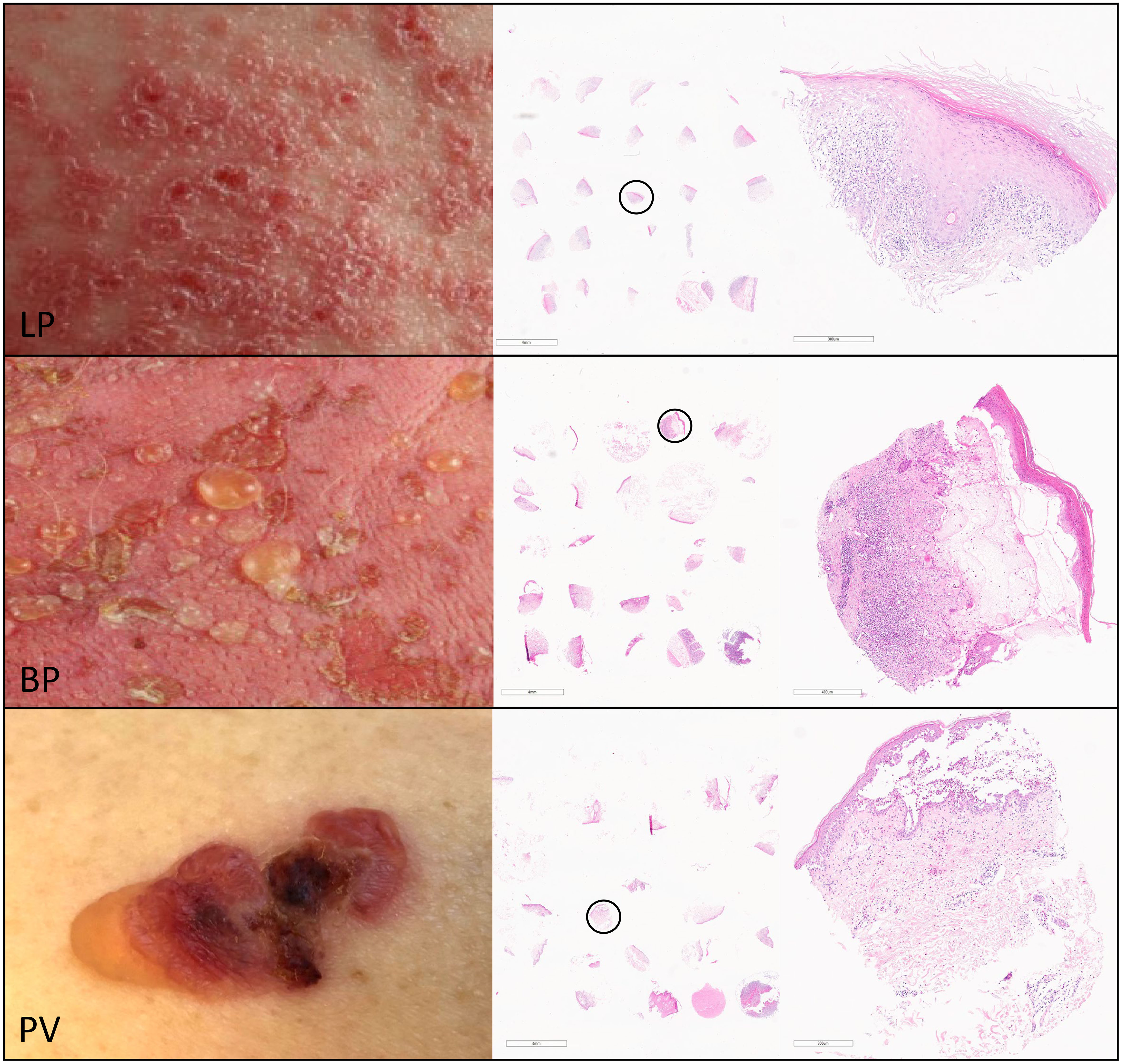
Pemphigus vulgaris (PV) and bullous pemphigoid (BP) are autoantibody-mediated diseases clinically characterized by blisters and erosions of skin and/or mucous membranes.
Emerging treatments for pemphigoid diseases
Bullous pemphigoid (BP) is a senile autoimmune blistering disease with autoantibodies against the basement membrane. Less than 20 cases of localized BP in young adults have been
Bullous pemphigoid (BP) is a rare, chronic antibody-mediated autoimmune blistering disease primarily affecting the elderly, with an age of onset over 60. Current treatment options are
Although classical features of humoral responsiveness (in vivo bound IgG and complement at the epidermal basal membrane-zone (BM-zone)) were observed, a possible additional role of T cell
In this review, we discuss the immune features of PV and BP, with a focus on the aberrations in T cell subsets, such as Th1 cells, Th2 cells, Th17 cells, regulatory T cells, T follicular helper cells,
- Pemphigus and Pemphigoid: From Disease Mechanisms to
- Autoimmune Bullous Skin Diseases: Pemphigus and Pemphigoid
- Localized bullous pemphigoid overlying a fistula for hemodialysis
Bullous pemphigoid is the most frequent autoimmune bullous disease and mainly affects elderly individuals. Increase in incidence rates in the past decades has been attributed
Bullous pemphigoid (BP) is the most common autoimmune blistering disease in the developed world and usually affects elderly individuals, with an average age of 80 years. The
Bullous pemphigoid (BP) is a senile autoimmune blistering disease with autoantibodies against the basement membrane. Less than 20 cases of localized BP in young adults have been reported and the understanding of localized BP
Localized bullous pemphigoid overlying a fistula for hemodialysis
Pemphigoid diseases are a heterogeneous group of autoimmune blistering diseases (AIBDs) that are clinically characterized by subepidermal (muco)cutaneous blistering (Figure 1, Table 1).
Subepidermal blistering associated with the human skin diseases bullous pemphigoid and herpes gestationis has been thought to be an IgG autoantibody-mediated
Autoimmune bullous skin diseases, such as pemphigus and pemphigoid, may enable clarification of the mechanisms of immune regulation in the skin. Pemphigus and
Methods: We hereby present a multicenter cohort of 7 patients with LBP developed after local triggers: radiotherapy, thermal burns, surgery, rosacea, edema and a paretic leg.
Introduction: Localized bullous pemphigoid (LBP) is an infrequent bullous pemphigoid (BP) variant restricted to a body region. According to the most compelling
Although classical features of humoral responsiveness (in vivo bound IgG and complement at the epidermal basal membrane-zone (BM-zone)) were observed, a possible additional role of T cell
Autoimmune blistering skin diseases
- Insights Into the Pathogenesis of Bullous Pemphigoid: The Role of
- Autoimmune Bullous Skin Diseases—Pemphigus and Pemphigoid
- Bullous Pemphigoid: Trigger and Predisposing Factors
- Emerging treatments for pemphigoid diseases
Interleukin-13 (IL-13), a key T-helper 2 cytokine, has a central role in type 2 inflammation and is implicated in various skin disorders. This study investigated the IL-13
Abstract Introduction. Localized bullous pemphigoid (LBP) is an infrequent bullous pemphigoid (BP) variant restricted to a body region. According to the most compelling evidence, LBP
Localized bullous pemphigoid (LBP) rarely evolves into the generalized form, and the prognosis is better. In our opinion, the occurrence of LBP is underestimated because of incorrect

Abstract Localized bullous pemphigoid (LBP) rarely evolves into the generalized form, and the prognosis is better. In our opinion, the occurrence of LBP is underestimated
Our findings suggest that tracking Tfh cells in people with bullous pemphigoid could help predict disease relapses before symptoms are experienced. Targeting Tfh cells
Although classical features of humoral responsiveness (in vivo bound IgG and complement at the epidermal basal membrane-zone (BM-zone)) were observed, a possible additional role of T cell
Pemphigus vulgaris (PV) and bullous pemphigoid (BP) are autoantibody-mediated diseases clinically characterized by blistersanderosions of skin and/or mucous membranes. Immune
Bullous pemphigoid (BP) is the most frequent autoimmune subepidermal blistering disease provoked by autoantibodies directed against two hemidesmosomal proteins: BP180
Two new cases of the rare, nonmucosal and nonscarring localized variety of pemphigoid are described. With reference to the data in the recent literature, the disease was classified as
Bullous pemphigoid is the most frequent autoimmune bullous disease and mainly affects elderly individuals. Increase in incidence rates in the past decades has been attributed to population
Localized bullous pemphigoid, a T cell-mediated disease? Electron microscopic and immunologic studies (Q42494755) From Wikidata. Jump to navigation Jump to search. scientific article. edit.
Likewise, increments in soluble CD23 have been documented both in BP and in dialyzed patients, thus suggesting a possible pathogenic link between the two processes. 5
Bullous pemphigoid is the most frequent autoimmune bullous disease and mainly affects elderly individuals. Increase in incidence rates in the past decades has been attributed
- Medisport Starnberg Harald Kettel
- Isana Herzenswärme Duschgele – Isana Duschgel Herren
- Neopixel Ring Beispielprogramm – Neopixel Rgb Ring Anschließen
- Sehr Empfehlenswert Und Gerne Immer Wieder.
- Pictures Of Kidney Stones
- Consulta Aquí Si Eres Beneficiario Del Pago De Deuda Social
- Pepsi Max Jetzt Auch Mit Pepsi Max Vanilla Taste Erhältlich
- Family Guy Taps Sam Elliott To Succeed Adam West As Mayor
- Dinge, Die Ihr Am Wilden Kaiser Machen Müsst
- Beratungscenter Electronic-Banking Sparkasse Schwarzwald-Baar