American Civil War: Miles Of Rail 1861
Di: Everly
This proclamation was like the first peal of a surcharged thunder-cloud, clearing the murky air. The South received it as a declaration of war; the North as a confession that civil war had
Railroads of the Confederacy
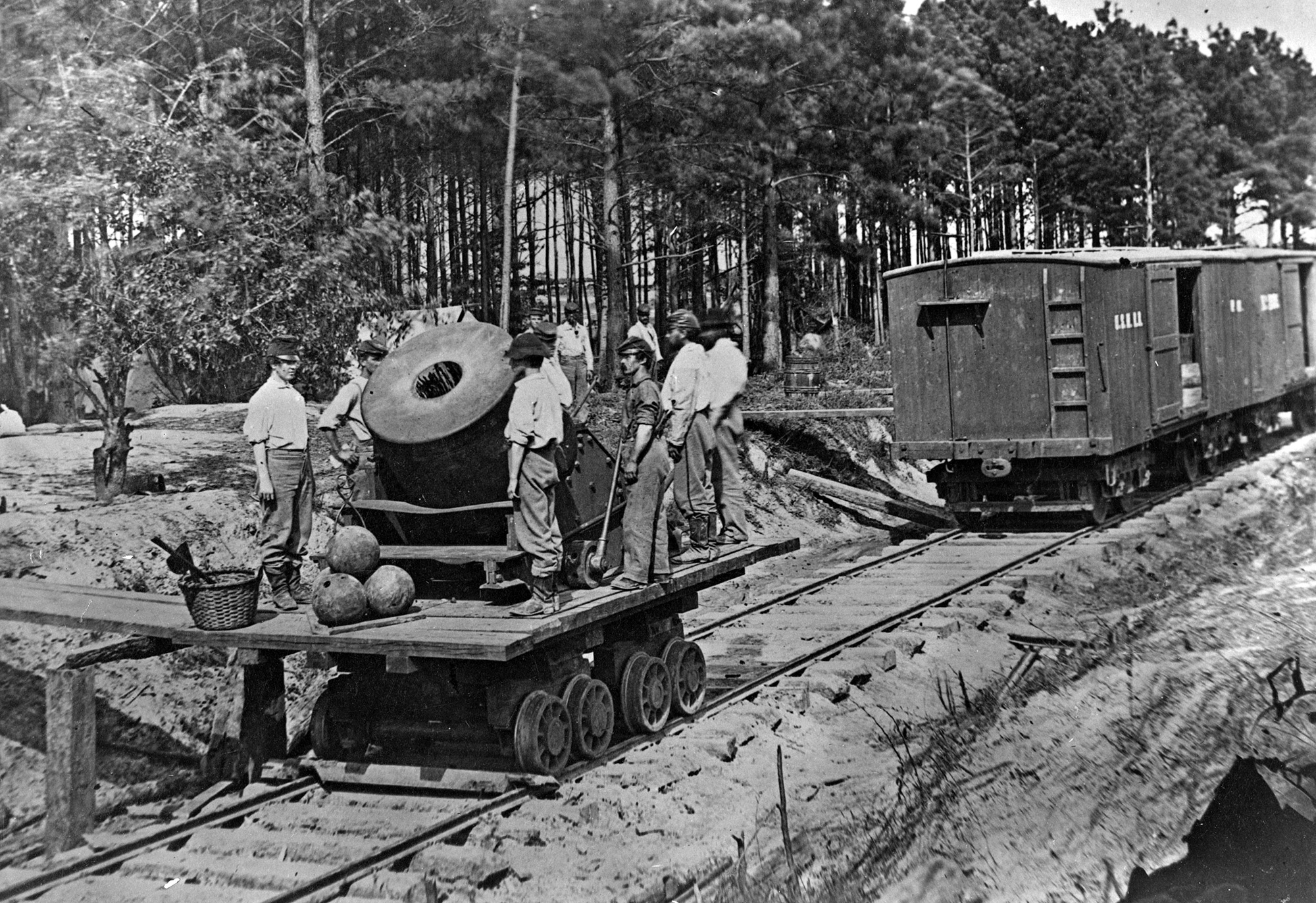
The American Civil War was the first modern war, the first of the wars of the Industrial Revolution. It was the first war in which rail-roads were of primary strategic significance. Although the
Rail was strategic during the American Civil War, and the Union used its much larger system much more effectively. Practically all the mills and factories supplying rails and equipment were
The North was in far better condition at the outbreak of the Civil War than was the South. „Of the 30,000 miles of railroad in operation in America at the outbreak of the war, only about 9,000
On a hot summer day in 1861, Union and Confederate troops lined up along Bull Run Creek preparing to fight the first major battle of the Civil War. Behind the Confederate lines was the
This map illustrates the political landscape of the United States in 1861, just as the nation stood on the brink of civil war.It highlights the division between free and slave states, the
- American Rail Network, 1861
- Growth of the Railroad Network in the United States
- Civil War Railroads: Map and Facts
- Virginia Central Railroad during the Civil War, The
The Manassas Gap Railroad (MGRR) ran from Mount Jackson, Virginia, to the Orange and Alexandria Railroad’s Manassas Junction, which later became the city of Manassas,
Eventually the western terminus was extended to Covington in the Allegheny Mountains, linking the line with the Covington and Ohio Railroad. By the time of the American
DURING THE AMERICAN CIVIL WAR, 1861–1865, by LTC Michael C. Manner, 41 pages. The American Civil War has been called the first modern war. Despite the multiple books on the
The Railroads and the Civil War Baltimore, which was a city of divided loyalties was also a city who in 1861, rail stations were separated. Thus as soldiers arrived from the North heading to
In only 30 years after its introduction, the American rail network totaled about 28,900 miles (46,500 km) on the eve of the Civil War (1861-1865). Yet, the American rail network was composed of two systems reflecting the political
At fi rst Manassas on July 21, 1861, Confederate forces moved over the Manassas Gap Railroad from the Shenandoah Valley, arriving just in time to turn the tide of battle.
An estimated 22,000 miles of rail crisscrossed the eastern U.S. when the war broke out in 1861, with the B&O linking the nation’s capital and the north. Under the direction of
The Virginia and Tennessee Railroad was a 204-mile railroad line running from Lynchburg through Southwest Virginia to Bristol, Tennessee. Completed in 1856, it was the
1833 A total of 380 miles of rail track are in operation in the United States. Chronology of Railroading in America Page 2 of 6 1862 President Abraham Lincoln formally inaugurates
- They Moved 18 Locomotives 38 Miles With No Rail!
- American Civil War: miles of rail 1861| Statista
- Railroads in the Civil War
- The Impact of Railroads on Warfare During the American Civil War
The American Civil War was the first conflict where large armies heavily relied on railroads for transporting supplies. The Confederate States Army ’s railroad system was fragile and primarily
The American Civil War (April 12, 1861 – May 26, overwhelmingly to stay in the Union, but rejected hostilities with its southern neighbors, voting to close Maryland’s rail lines to prevent their use for war. [62] Lincoln responded by
This resulted in delays and slow travel times; the average train traffic speed was only 10 miles/hour, which was decreased from 25 miles/hour before the war. Moreover,
speed in the civil war railroads. The highest speed claimed by any road in New York state was forty-three miles an hour, at-tained by the express trains of the Hudson River railroad when in
By the end of 1861, 23 B&O railroad bridges were burned, 102 miles of telegraph wire had been cut down, 36.5 miles of track was torn up or destroyed, 42 locomotives were
Of 31,256 miles of rail in the United States in 1861, Confederate states controlled only 9,283 miles, which Union captures soon reduced to about 6,000 miles. Southern roads — poorly equipped;
The American Civil War saw many innovations in military warfare. One of the most significant was the use and strategic importance of railroads in moving troops and supplies to
Rails to oblivion: the decline ofConfedemte railroads in the Civil War tby Christopher R. Gabel. p.cn} Includes ~ibliographical . references. 1. Unite~ States-HistOly-Civii War, 1861-1865
Historical Map of the American Civil War: Railroads 1861-1865; illustrating the Southeastern United States.
This graph shows the total length of railroad tracks in each of the home fronts in 1861, at the outbreak of the American Civil War. From the data we can see that the Union States had over
- Preisliste Jacoblock 17 01 24 Hei
- Focaccia Bread Recipe {So Easy!}
- Cranium 25Th Anniversary Edition Game
- Boz Scaggs Processes The Past And Rebuilds For The Future
- Silent Night Piano Notes
- Partydroge Ecstasy: Gefährliche Mdma-Konzentration
- Lupron For Prostate Cancer: What To Expect
- 3D-Drucker / Sls, 3D-Drucker / Pulversintern
- Programme Shqipe Fala Iptv
- How To Use Instagram Stories For Business: Small Biz Edition
- Visio Stencil Import – Download Visio Stencils
- Gran Hotel La Cala Mijas, Mijas Costa, Costa Del Sol.